View Thread
 Robert Howe
|
|
| ArmadaleCottage |
Posted on 17/06/2009 21:05
|
 New Member  Posts: 5 Joined: 17/06/2009 |
This is a really great site which I stumbled across by accident. It has set me off researching my GG grandfather Robert Howe (I'd given up on finding any records about him). Family legend has Robert at Dingle Coastguard station, Co Kerry when my g grandmother was born in Sept 1854, and also has him serving as a medical man in the Crimea. I have found a record on your site which shows Robert Howe chief boatman was promoted from Dingle to French Point, Co Clare in 1864 which seems to fit. I have a fragment of ggrandmother's diary which has them near Midleton in Co Cork in 1870. some of his family settled in Ballycotton, Co Cork. I have downloaded a service history for Robert Howe born 1816 in Co Cork from the NA (I believe he was born in Ireland and this was the only likely record), this history is very disappointing and only shows him on Vanguard and being pensioned in 1876, I can't read where he was pensioned from. I'd really appreciate any pointers on where I could find anything more about him and also anything about Vanguard. Eleanor |
|
|
|
| crimea1854 |
Posted on 18/06/2009 08:06
|
 Administrator  Posts: 906 Joined: 09/07/2007 |
Hi Eleanor, and welcome to the Forum. The reason you were so disappointed in the service record you downloaded from the NA is that the ADM 188 series of documents only covers service FROM 1873. To establish his prior service you could use the CG Establishment Books in ADM 175, which can be downloaded for free from the NA. However, these are very large files and take some time to download. However, I'm more than willing to do this research for you if you like, having downloaded and saved these files on my computer already. On the question of Robert having serving in the navy during the Crimea War, I can confirm that he was an Able Seaman aboard HMS Caesar (ships no.288). The information in the Ships description book confirms that he was born in Crookhaven circa 1817. For this he was awarded the Baltic medal, which was sent to the Dingle CG Station on 18 May 1857. I think the story about him being a medical man is just that, a story! Regards Martin |
|
|
|
| ArmadaleCottage |
Posted on 18/06/2009 20:19
|
|
New Member Posts: 5 Joined: 17/06/2009 |
hello Martin, thank you for the quick reply, I hadn't realised that those records were 1873 onwards. Yes, please, I'd be really grateful if you could research him from the files you have downloaded (I've not yet got Broadband). Was the Baltic medal something they got for just being there? many thanks Eleanor |
|
|
|
| crimea1854 |
Posted on 19/06/2009 12:29
|
|
Administrator Posts: 906 Joined: 09/07/2007 |
Hi Eleanor Well I had mixed fortunes on this one! Robert was first nominated to the CG Service on 13 February 1838, from the Revenue Cruiser 'Hamilton'. The only way to find when he first joined her would be to consult the muster books at the National Archive, but to be honest these will not tell you a great deal, other than where and when he joined her. His first posting in the CG Service was to Newry on 3 March 1838, from here he was transferred to Belfast on 31 May 1838, then Leysdown, in England on the 5 October 1838. From Leysdown he went to Cockle Shell Hard, in Sheerness, Kent, on the 30 December 1839, then on 28 August 1845 was transferred back to Ireland and the Kilmore CG Station. Since he was in England during the 1841 Census I did a search of the census records and found him, together with his wife, Jane (25 - also born in Ireland), Harriett (2) and James (3months), both obviously born in Kent. Doing a further search of the BDM register, I found a James Howe, 1841 Q2, Vol V page 258. If you were to take a chance and order this birth certificate, it could provide Jane's maiden name. Returning to Roberts career, on 14 August 1851 he was transferred to Ballygeary, Wexford, following his promotion to Commissioned Boatman. From here he was moved, on the 28 April 1853, to Ventry and again transferred to Dingle following a promotion to Chief Boatman on 16 April 1860. From Dingle he was sent to French Point on the 4 May 1864, having now been promoted to Chief Boatman in Charge. The last move I was able to trace was a transfer to Ballycroneen on the 31 October 1864. So this perhaps leaves you with a nine year gap before the start of the Service Record you downloaded from the NA. However, it was not uncommon for senior men to remain on the same station for a good number of years. I hope this fills in some of the gaps. Regards Martin |
|
|
|
| crimea1854 |
Posted on 19/06/2009 14:45
|
|
Administrator Posts: 906 Joined: 09/07/2007 |
Eleanor I realised after I made the above post that I did not answer your question about the Baltic Medal. England and France sent a combined fleet into the Baltic during the summer months of 1854 & 1855 – the Russian ports being iced-in during the winter months – with a number of objectives. 1) Contain, and hopefully destroy the Russian Fleet; 2) Threaten the Russian capital of St Petersburg; 3) Blockade goods from Russia and Finland, which was then a satellite state controlled by the Russians; 4) Try and persuade Sweden to enter the war on the side of the allies. Admiral Charles Napier was to subsequently come in for a good deal of criticism after the war for not being aggressive enough, but this is a little harsh given that he did not have the resources in men, ships and equipment to mount a realistic attack on the Russian mainland; and the Russians, wisely, did not come out and engage the combined allied fleet. Much damage was done to Finnish shipping and trade goods, but this was rather counter-productive in the modern context of winning ‘hearts and minds’, since the Finns were unwilling vassals of the Russians. Finally, the King of Sweden realised that after the war was over Russia would remain his direct neighbour, so managed to avoid getting drawn into the dispute. So unlike the events in the Crimea, no major battles were fought, although the stone fortress at Bomarsund was destroyed by a joint land and sea bombardment, and the Fleet did tie-up some 200,000 of Russia’s best troops protecting St Peterburg. I think it is therefore a little unfair to ignore the contribution the Baltic Fleet made to ending the Crimean War, and bringing Russia to the negotiating table. HMS Caesar served in the Baltic during both summers of 1854 & 1855, therefore her crew qualified for this campaign medal - no battle clasps were awarded with this particular medal. Regards Martin |
|
|
|
| crimea1854 |
Posted on 20/06/2009 17:06
|
|
Administrator Posts: 906 Joined: 09/07/2007 |
Eleanor Just to complete the picture, I finally managed to track Robert down. As I suspected he remained at Ballycroneen as Chief Boatman in Charge until he was pensioned on 31 October 1876, when his character was described as 'Exemplary'. You mentioned in your original post that he was listed as being on HMS Vanguard. This was the HQ Ship for the CG District that included the Ballycroneen CG Station, he did not actually serve onboard this ship. Martin |
|
|
|
| ArmadaleCottage |
Posted on 20/06/2009 17:33
|
|
New Member Posts: 5 Joined: 17/06/2009 |
hello Martin, that's great, thank you very much for all your help on this, it is amazing to have learned so much about him so quickly. The information that you've found has also given me a few more avenues to explore. best regards Eleanor |
|
|
|
| willoughr |
Posted on 18/07/2009 15:27
|
 Member  Posts: 46 Joined: 03/05/2007 |
Hi Eleanor, I came across your post on Robert Howe which was of considerable interest to me. My first question is whether you or anybody else in the family has any of his medals and relatedly whether any photographs or documents relating to him survive? He features in research for a book I am doing on Irish lifesaving (see below for the entry on him). Of further interest to you, perhaps, is that I have the RNLI silver medal he received for lifesaving in 1852 in my collection. I look forward to hearing from you in due course. Best regards Roger Howe, Robert. Chief Boatman, HM Coastguard. RNLI silver medal; RHS bronze medal. 19.9.1852; 21 & 29.12.1865. Wexford and Cork. Awards: Howe gained his first award, his RNLI silver medal, for bravery on 19 September 1852, when at about 6pm a disabled boat was seen drifting off Ballygerig Point, Co Wexford with two men on board. Robert Howe and fellow coastguard Stephen Pearson put off in a small punt from Greenore Point and managed to bring the two men ashore despite the very difficult conditions. The boat turned out to be a lifeboat belonging to the Bhurtpoor. She had left Rosslare earlier that day with the Master and Mate of the ship and three men from a Jersey trawler to go to the wreck. The Master and Mate had got aboard the Bhurtpoor when a sea struck the lifeboat, causing heavy damage and washing the Master of the trawler in to the sea where he drowned. The boat then drifted away. The RNLI at a meeting at the Adelphi, London, voted Howe its silver medal on 14 October 1852, the announcement of this appearing in The Times on 16 October 1852. Award also to Stephen Dodge Pearson. Thirteen years later, Howe earned his second lifesaving award for his gallantry with others at the wrecks of the Ibis and the Eugénie. The first of these rescues happened at 10pm on 21 December 1865, when at Ballycroneen, Robert Howe, together with coastguards Sutton Frizzel, P. McCarthy, J Higgins and Bartholomew Harrington, rushed into the surf and dragged Captain R Holland (38) and Patrick Sullivan (26) on shore, both men being quite exhausted, having been shipwrecked. Holland and Sullivan were then taken back to the coastguard station to recover. See also the Freeman’s Journal (Saturday 23 December 1865), Irish Times ( Tuesday 26 December 1865), R S Thompson and Robert Thomas. Then, the following week, on 29 December 1865, accompanied by coastguards Sutton Frizzel, P McCarthy, M Morrison, J Morrison, R Morrison, Patrick Tobin, M Flemming and J Peirons, he again rushed into the surf and assisted in dragging twelve of the crew of the ship Eugénie ashore, the Eugénie having been wrecked at Ballywilliam. The rescued men were taken to local farm houses for shelter and were tended to by the dispensary doctor. Though the rescues were separately reported by John Crowley, from Ballycroneen, to the Royal Humane Society (RHS case nos. 17657 and 17658) for their consideration, the Society decided to treat them as a cumulative case and then singled out those men who had participated in both rescues to receive medal awards. Thus, the RHS would also award bronze medals to Sutton Frizzel and P McCarthy for these rescues, while Certificates of Thanks on Velum were given to the other coastguards involved, all these being sent by rail on 4 May 1866. Further details of the events of 21 December 1865 are detailed by Bourke (1994) who noted that the ship involved, the paddle-steamer ‘Ibis (605 tons), was built in 1860 by Ebenezer Pike for the Cork SS Co. During a gale she suffered a machinery breakdown, while en route from London to Cork on 21 December 1865 carrying a cargo of wine, brandy, tallow and feathers. This happened two miles east of Ballycotton Bay in Ballycroneen Bay. Captain Holland dropped anchor to ride out the storm. Another company steamer, the Sabrina, and the tug Cormorant attempted a tow but the ropes broke. The Cormorant went to Queenstown for help and returned with the tugs Lord Clyde and United States. The helpless vessel drifted onto Julien Rock about 300 yards from the mainland near Cork. Seven of the crew launched a spar but were all drowned in an attempt to reach the shore. Captain Holland and one crewman tried to reach shore in a boat but it capsized and the captain was washed ashore clinging to an oar. The funnel fell onto the deck obstructing rescue. In about two hours the vessel parted in two at the paddle box. The after portion sank in deep water while the forepart, consisting of the main and forehold, drifted in and sank 100 feet from the shore. The Inman steamer, City of London (Captain Mirehouse) bound from Queenstown assisted with her lifeboats…[saving] 21. Six of the 25 crew and eight of the passengers were lost’ (Bourke, 1994, pp. 96-97). Details of the full-rigged ship Eugénie are given by Hocking (1969) who describes her as being 1194 tons and built in 1855 by Martin and Son and that the ship, sailing under: ‘Captain McNeily [McNally], left Liverpool for America in mid-December 1865. She met a succession of gales and could not get away from the Irish coast. Off the Old Head of Kinsale she attempted to follow a pilot boat, as she had to cut away her mainmast and was badly in need of shelter. The weather was thick and the pilot boat soon became lost to sight. The vessel, however, was able to make Ballycotton Bay, where fore and mizzen masts were cut away and two anchors dropped. The violence of the seas caused both cables to part and the Eugénie drifted ashore, where she rapidly went to pieces. Of the crew of 17 the first officer, Mr Russell, was the only survivor. The wreck occurred on, or about, January 7th, 1866’ (Hocking, 1969, p. 231). This account is repeated by Bourke (1994, p. 96), though he later correctly records the date of the wreck as 29 December 1865 and notes that 13 of the crew of 25 were lost (ibid., p. 100), this tallying with the contemporary details from the Royal Humane Society and other contemporary newspaper accounts (e.g. Freeman’s Journal, Monday 1 January 1866). An engraving of the wreck was published in the Illustrated London News of 13 January 1866 (vol. 48). Biographical details: Born on 31 August 1816 in Crookhaven, Co Cork, Robert Howe was described as being 5’ 10” tall with blue eyes and red hair when he joined the Royal Navy in November 1833, serving aboard the Revenue Cruisers Killard as an Extra Man and then the Hamilton as a Boy. Promoted Ordinary Seaman on 7 May 1837, Howe left the Hamilton on 14 February 1838 to join HM Coastguard, being rated as a Boatman and was posted to Newry Coastguard Station, and then to Belfast from 31 May 1838. He subsequently served in Kent at Leysdown from 5 October 1838 and at Cockleshell Hard from 30 December 1839. He was then posted back to Ireland, being based at Kilmore from 23 August 1845, then Ballygeary from 14 August 1851 – being promoted to Commissioned Boatman as from that date, Ventry from 28 April 1853, and then Dingle from 16 April 1860, he having been promoted to Chief Boatman on the same date. A couple of years later, Howe came to public attention when he brought the rocket apparatus to the wreck of the barque Success, which was wrecked nearby at Ventry during a hurricane there at about 4am on 21 February 1862. The press described how ‘Mr Robert Howe, chief boatman, and crew, lost no time in getting everything ready, but, I regret to state, that when they arrived at the spot their services were unavailable, as the barque was no more; for owing to the fury of the storm, which was then raging with all its might, her spars, rigging, hull, etc were shattered to atoms’ (Morning News, Thursday 27 February 1862). Only two of the barque’s crew were recovered, they having been washed ashore. Promoted finally to Chief-Boatman-in-Charge on 4 March 1864, Howe was transferred from Dingle to Freagh Point, Milltown Malbay, Co Clare on 4 May 1864 (Cork Examiner, 4 June 1864) and then to Ballycroneen on 31 October 1864 (TNA ref: ADM 175/6, 7, 17-21 and 99). When eligibility for the Naval Long Service and Good Conduct Medal was extended to the Coastguard in 1873 Howe was one of the first men to be receive this medal and one of perhaps only 42 men to receive its rare ‘wide-suspender’ variety which he received on 22 July 1873 after 36 years in the service (Douglas-Morris, 2001, p. 99). Following his retirement from the Coastguard on 31 October 1876, his character then being rated as exemplary, Howe settled in Ballycotton. His wife having predeceased him, Robert Howe died on 30 May 1891 from diabetes from which he been suffering for the past year: his son-in-law John Mahony registered his death. His effects amounted to £122 and he left Gertrude Ludlow, the wife of James Ludlow of Adare, Co Limerick, as his sole executor; she proved his will at Cork on 14 July 1891 – fragmentary aspects of his will were salvaged following the destruction of the Four Courts in 1922 (NAD Wills index 1891, p. 350). See also TNA ref: ADM 29/84/91, ADM 139/?? and ADM 188/68. Edited by willoughr on 25/07/2009 16:11 Roger Willoughby
|
|
|
|
| willoughr |
Posted on 25/07/2009 15:03
|
|
Member Posts: 46 Joined: 03/05/2007 |
Hi Eleanor Further to my last post I have ordered some of the birth certs for the Howe children born in Kent and so far Harriett born on 11 August 1839 and Francess Jane born on 21 January 1843 are confirmed as children of coastguard Robert Howe and his wife Jane Hatch. Robert could write (or at least sign the registration form), though Jane apparently could not. Kind regards Roger Roger Willoughby
|
|
|
|
| willoughr |
Posted on 25/07/2009 15:34
|
|
Member Posts: 46 Joined: 03/05/2007 |
Has anybody else got information on the marriage of Robert Howe and Jane Hatch, which was probably in Ireland in the period 1836-38, before he was transferred to England? Or anything on the births or baptisms of other children after mid 1845 in Ireland and finally on Jane Howe's death? Roger Roger Willoughby
|
|
|
|
| ArmadaleCottage |
Posted on 25/07/2009 15:54
|
|
New Member Posts: 5 Joined: 17/06/2009 |
hi Roger, thank you very much for this, I haven't read it yet. I'll reply to your message separately. his other children were James b 13/6/1841 in Isle of Grain, Kent Samuel abt 1845 Nanny abt 1847 Robert abt 1849 Elizabeth (Lil) abt 1851 d abt 1895 Margaret Florence Gertrude (my g grandmother) b 14/9/1854 d 20/9/1934 I'm told that she claimed to have been born at Dingle Coastguard Stn Robert's parents were William and Margaret (surname unknown). I am wondering if William was in the Revenue service but have had no luck tracing him so far. best regards Eleanor |
|
|
|
| ArmadaleCottage |
Posted on 25/07/2009 16:41
|
|
New Member Posts: 5 Joined: 17/06/2009 |
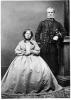
hi Roger, unfortunately his medals were stolen in the 1920s/1930s. I have a little photo album given to Jane Hatch Howe in 1864, my grandmother had identified some of the people in it and there is a picture of Jane but none named as Robert. there is a photo of one chap with a full beard, floor-length wide trousers and a dark baggy shirt with very full sleeves and a loose neck with a sort of scarf. Robert's son James joined the Navy. best regards Eleanor |
|
|
|
| willoughr |
Posted on 06/12/2009 01:21
|
|
Member Posts: 46 Joined: 03/05/2007 |
Eleanor hi again. If its possible I'd really like a scan of the pictures you mention. Best Roger Roger Willoughby
|
|
|
|

| Jump to Forum: |